
|
|
|
Printing Date
|
2017-02-15 16:18:45 JST
|
|
Restriction of specific regulatory purposes
|
|
|
Confidentiality
|
|
|
Name
|
Diammonium hydrogen 2-hydroxypropane-1,2,3-tricarboxylate
|
|
Legal entity owner
|
National Institute of Health Sciences / Tokyo / Japan
|
|
UUID
|
IUC5-8627c376-bb47-4255-90c4-6639d07c0bb2
|
|
|
Dossier UUID
|
0
|
|
|
Author
|
dra / National Institute of Health Sciences / Tokyo / Japan
|
|
|
Date
|
2016-12-21 15:15:08 JST
|
|
|
Remarks
|
|
Chemical name
|
Diammonium hydrogen 2-hydroxypropane-1,2,3-tricarboxylate
|
|
Legal entity
|
|
|||||||||||||
|
UUID
|
IUC5-0469431d-735d-47de-8e42-89cac5c65922
|
|
|
Dossier UUID
|
0
|
|
|
Author
|
dra / National Institute of Health Sciences / Tokyo / Japan
|
|
|
Date
|
2017-02-15 15:51:02 JST
|
|
|
Remarks
|
|
Purpose flag
|
key study
|
||
|
Study result type
|
experimental result
|
||
|
Reliability
|
1 (reliable without restriction)
|
||
|
Rationale for reliability incl. deficiencies
|
OECD Test Guideline study under GLP condition
|
||
|
Reference type
|
Author
|
Year
|
Title
|
Bibliographic source
|
Testing laboratory
|
Report no.
|
Owner company
|
Company study no.
|
Report date
|
|
publication
|
MHLW
|
2011
|
Single Dose Oral Toxicity Test of diammonium hydrogen 2-hydroxypropane-1,2,3-tricarboxylate in Rats
|
available in the web of Japan Existing Chemical Data Base (JECDB) at http://dra4.nihs.go.jp/mhlw_data/jsp/SearchPageENG.jsp
|
Safety Research Institute for Chemical Compounds Co., Ltd.
|
|
data published
|
|
Qualifier
|
Guideline
|
Deviations
|
|
according to
|
OECD Guideline 423 (Acute Oral toxicity - Acute Toxic Class Method)
|
|
yes
|
|
Identifier
|
Identity
|
|
CAS number
|
3012-65-5
|
|
- Name of test material (as cited in study report): diammonium hydrogen 2-hydroxypropane-1,2,3-tricarboxylate
- Analytical purity: 100.0% - Lot/batch No.: 6803 - Stability under test conditions: The stability of test material was identified by analysis of the remainder. - Storage condition of test material: At a cold place (temperature 2~7℃) in a refrigerator, with a stopper. |
|
rat
|
|
other: Crl:CD(SD)
|
|
female
|
|
TEST ANIMALS
- Source :Charles River Japan Inc. - Age at study initiation: 8-9 weeks old - Weight at study initiation: Females, 207-224 g - Fasting period before study: Approximately 16-18 hrs - Housing:1/cage - Diet (e.g. ad libitum): Ad libitum except fasting period for 16-18 hrs before administration to 4 hrs after administration - Water (e.g. ad libitum):Ad libitum - Acclimation period:6-16 days ENVIRONMENTAL CONDITIONS - Temperature (°C): 22±3 ℃(actual temperature: 19-24℃) - Humidity (%):50 ± 20% (actual humidity: 33-57%) - Air changes (per hr): Approximately 10-15 times/hr - Photoperiod (hrs dark / hrs light):12 hrs light / 12 hrs dark |
|
oral: gavage
|
|
other: 0.5%CMC-Na
|
|
- Amount of vehicle (if gavage):10 mL/kg bw
|
|
300, 2000 mg/kg bw
|
|
3 (1st step group), 3 (2nd step group), 3 (3rd step group) and 3 (4th step group)
|
|
no
|
|
- Duration of observation period following administration: 14 days
- Frequency of observations: nearly successive observation (from time just to 1 hr after administration) and observation (at 2, 4 and 6 hr (only 3 & 4 steps) after administration) (day 0); twice a day (from day 1-day13) and once a day (day14) - Frequency of weighing: just before administration (day 0), and 1,3,5,7,10 and 14 day after administration - Necropsy of survivors performed: yes |
|
Sex
|
Endpoint
|
Effect level
|
Based on
|
95% CL
|
Remarks
|
|
female
|
LD50
|
> 2000 mg/kg bw
|
|
No deaths were observed in any group.
|
|
At 2000 mg/kg bw, mucus feces were observed.
No changes related to the test substance were observed in any group. |
|
No changes related to the test substance were observed in any group.
|
|
No changes related to the test substance were observed in any group.
|
Figures and Tables (in English) are available in the following full report of the study. http://dra4.nihs.go.jp/mhlw_data/home/pdf/PDF3012 -65 -5a.pdf |
The acute oral LD50of diammonium hydrogen 2-hydroxypropane-1,2,3-tricarboxylate was > 2,000 mg/kg bw in female rats based on a study conducted according to OECD TG 423. No deaths were observed at 2,000 mg/kg bw. This substance caused mucoid stools at 2,000 mg/kg bw. |
|
UUID
|
IUC5-55581c53-51f6-4e2f-a181-994678536d94
|
|
|
Dossier UUID
|
0
|
|
|
Author
|
dra / National Institute of Health Sciences / Tokyo / Japan
|
|
|
Date
|
2017-02-15 15:47:28 JST
|
|
|
Remarks
|
|
Purpose flag
|
key study
|
||
|
Study result type
|
experimental result
|
||
|
Reliability
|
1 (reliable without restriction)
|
||
|
Rationale for reliability incl. deficiencies
|
GLP guideline study
|
||
|
Reference type
|
Author
|
Year
|
Title
|
Bibliographic source
|
Testing laboratory
|
Report no.
|
Owner company
|
Company study no.
|
Report date
|
|
study report
|
MHLW Japan
|
2009
|
Combined repeat dose and reproductive/developmental toxicity screening test of diammonium hydrogen 2-hydroxypropane-1,2,3-tricarboxylate by oral administration in rats
|
available in the web of Japan Existing Chemical Data Base (JECDB) at http://dra4.nihs.go.jp/mhlw_data/jsp/SearchPageENG.jsp
|
BoZo Research Center
|
|
data published
|
|
7.8.1 Reproductive/developmental toxicity.001
|
|
combined repeated dose and reproduction / developmental screening
|
|
no
|
|
Qualifier
|
Guideline
|
Deviations
|
|
according to
|
OECD Guideline 422 (Combined Repeated Dose Toxicity Study with the Reproduction / Developmental Toxicity Screening Test)
|
no
|
|
yes
|
|
yes
|
|
Identifier
|
Identity
|
|
CAS number
|
3012-65-5
|
|
- Name of test material (as cited in study report): diammonium hydrogen 2-hydroxypropane-1,2,3-tricarboxylate
- Purity: 100.0% - Impurities (identity and concentrations): - Lot/batch No.: 6803 - Stability under test conditions: Stable - Storage condition of test material: Refrigeration - Dosing solution storage condition: Room temperature - Other: The dosing solution was used within 10 days of preparation. |
|
rat
|
|
other: Crl: CD(SD)
|
|
male/female
|
|
TEST ANIMALS
- Source: Charles River Laboratories Japan, Inc. Atsugi - Age at study initiation: 10 weeks - Weight at study initiation: Males: 371-439 g; Females: 219-273 g - Housing: Steel wire-mesh cage (250 mm x 350 mm x 200 mm ) - Diet: ad libitum - Water: ad libitum - Acclimation period: 15 days ENVIRONMENTAL CONDITIONS - Temperature (°C): 21-26 - Humidity (%): 42-64 - Air changes: 10-15 times / hr - Photoperiod: 12 hrs dark / 12 hrs light |
|
oral: gavage
|
|
water
|
|
PREPARATION OF DOSING SOLUTIONS:
VEHICLE - Amount of vehicle (if gavage): 5 mL/kg bw - Lot/batch no. (if required): 6F74 |
|
Test suspensions at each concentration to be used for males in week 1 and week 6 of administration were analyzed by the HPLC method at Bozo Research Center Inc. Results showed that the concentration of the test article in each suspension was 93.3 to 100.0% of the nominal concentration and both values were within the acceptable range (concentration: percentage of the nominal concentration, 100 ± 10%; C.V.: 10% or below)
|
|
(P) Males: 42 days including 14 days pre-mating and mating periods, and thereafter 14 days (P) Females: 41-47 days including 14 days pre-mating, mating and gestation periods, and the days until day 4 of lactation; satellite animals: 42 days.
|
|
Once/day, 7days/week
|
|
0 (vehicle), 100, 300, and 1000 mg/kg bw/day
|
|
|
Basis
|
actual ingested
|
|
12 animals/sex/dose as a main dose group,
5 males and 5 females at 0 and 1000 mg/kg bw/day as a satellite group (without mating) |
|
yes, concurrent vehicle
|
|
- Dose selection rationale: Doses in this test were set based on the results of the following study: 14-day repeated dose oral toxicity test (doses: 100, 300, and 1000 mg/kg bw/day). In the 14-day repeated dose oral toxicity test, abnormalities were observed in animals in the 1000 mg/kg bw/day group, such as an increase in relative kidney weight. No effects were observed at 300 mg/kg bw/day. On the basis of these effects, a dose level of 1000 mg/kg was selected as the maximum dose expecting to induce the toxic changes, and then dose levels of 300 and 100 mg/kg bw/day were selected as a middle dose and a minimum dose levels, respectively, in accordance with a common ratio of approximately 3.
- Rationale for animal assignment (if not random): Body weight-balanced randomization - Post-exposure recovery period in satellite groups: 14 days |
|
CAGE SIDE OBSERVATIONS: Yes
- Time schedule: Males and females: once before the start of administration, 3 times/day during the administration period, and once during the recovery period DETAILED CLINICAL OBSERVATIONS: Yes The functional observational battery testing (FOB) was performed on all animals. Among the measures in the FOB, detailed clinical observations were made before the initiation of dosing. Thereafter, in males of the main groups, detailed clinical observations were made once a week. Also in females of the main groups, detailed clinical observations were made once a week in pre-mating and mating periods thereafter, and then those were made on days 1,7,14 and 20 of gestation, and on day 4 of lactation. For the satellite group, detailed clinical observations were made once a week in dosing and recovery periods. Sensory motor reflexes, forelimb and hindlimb grip strengths, and motor activity were measured on week 6 of administration period (main/recovery group animals) and week 2 of recovery period (recovery group animals). BODY WEIGHT: Yes - Time schedule for examinations: Males (main) & males and females (recovery group): Days 1, 4, 8, 11, 15, 22, 25, 29, 32, 36, 39, 42, and the day of necropsy (after ca. 16h-fasting) in dosing period Males and females (recovery group): Days 1, 4, 8, 11, 14, and the day of necropsy (after ca. 16h-fasting) in recovery period Females (main group): Twice a week during the precopulation period (days 1, 4, 8, 11, and 15); gestation days 0, 4, 7, 11, 14, 17, and 20; lactation days 0 and 4; and the day of necropsy (after ca. 16 h-fasting) FOOD CONSUMPTION AND COMPOUND INTAKE (if feeding study): - Food consumption: Yes Males (main) & males and females (recovery group): Days 1, 4, 8, 11, 15, 32, 36, and 39 in dosing period Males and females (recovery group): Days 1, 4, 8, 11, and 14 in recovery period Females (main group): Days 1, 4, 8, 11, and 15; gestation days 1, 4, 7, 11, 14, 17, and 20; lactation days 2 and 4 OPHTHALMOSCOPIC EXAMINATION: No HAEMATOLOGY: Yes - Time schedule for collection of blood: Blood was collected on the day of necropsy - Anaesthetic used for blood collection: Yes (ether) - Animals fasted: Yes, 16-20h - How many animals: 5 sex/dose/group - Parameters checked in table were examined. CLINICAL CHEMISTRY: Yes - Time schedule for collection of blood: Same as hematology - Animals fasted: Same as hematology - How many animals: Same as hematology - Parameters checked in table were examined. URINALYSIS: Yes (males only) - Time schedule for collection of urine: Day 37-38 in dosing period, day 11-12 in recovery period - Metabolism cages used for collection of urine: No data - Animals fasted: fasting and only water at libitum (4h-urine), no fasting (20h-urine) |
|
SACRIFICE:
Male animals: Rats were euthanized by exsanguination under ether anesthesia on the day after the last administration. Maternal animals: Rats were euthanized by exsanguination under ether anesthesia on day 4 of lactation. GROSS PATHOLOGY, Yes: whole organs and tissues ORGAN WEIGHTS, Yes: Brain, thyroids(including parathyroids), thymus, heart, liver, spleen, kidneys, adrenals, testes, epididymis HISTOPATHOLOGY, Yes: Cerebrum, cerebellum, pituitary gland, spinal cord (thoracic), sciatic nerve, thyroid, parathyroid, adrenal glands, thymus, spleen, submandibular lymph nodes, mesenteric lymph nodes, heart, lung (including the bronchi), stomach, duodenum, jejunum, ileum, cecum, colon, rectum, liver, kidney, bladder, testis, epididymis, ovary, uterus, seminal vesicles, sternum and femur (including bone marrows), macroscopic lesions. |
|
Organ weight: Brian, thyroids (including parathyroids), thymus, heart, liver, spleen, kidneys, adrenals, testes, epididymis
|
|
The data were analyzed for homogeneity of variance by the Bartlett test. If variances were homogeneous, data was analyzed by the Dunnett test, whereas heterogeneous data was analyzed by the Dunnett type mean rank test (p<0.05, two-sided).
In the recovery test, these values of two groups were analyzed by F test. If variances were homogeneous, data was analyzed by the Student t-test, whereas heterogeneous data was analyzed by the Aspin-Welch t-test (p<0.05, two-sided). |
|
Endpoint
|
Effect level
|
Based on
|
Sex
|
Basis for effect level / Remarks
|
|
LOAEL
|
300 mg/kg bw/day (actual dose received)
|
test mat.
|
male/female
|
effects on the stomach
|
|
no effects
|
|
no effects
|
|
no effects
|
|
not examined
|
|
not examined
|
|
not examined
|
|
no effects
|
|
yes
|
|
yes
|
|
no effects
|
|
no effects
|
|
no effects
|
|
yes
|
|
not examined
|
|
CLINICAL CHEMISTRY
High value of glucose was observed at 1000 mg/kg bw/day at the end of dosing. URINALYSIS (male only) At week 6 of administration in the main group, an increased trend of acidification and a decreased incidence of crystallization of phosphate were observed dose-dependently. HISTOPATHOLOGY: NON-NEOPLASTIC [At the end of dosing] and [At the end of recovery period] Stomach: Minimal or mild hyperplasia of squamous cells in the limiting ridge were observed in males and females at 1000 mg/kg bw/day. Any other changes with statistically significant in the tables were considered to be incidental due to temporary, dose-independent, or within the normal ranges of physiological variability. |
Figures and Tables (in English) are available in the following full report of the study. http://dra4.nihs.go.jp/mhlw_data/home/pdf/PDF3012 -65 -5d.pdf |
|
Based on the effects on the stomach in males and females at 1000 mg/kg bw/day, the NOAEL for repeated oral dosing was determined to be 300 mg/kg bw/day in male and female rats.
|
A combined repeated oral dose toxicity study with the reproduction/developmental toxicity screening test was performed according to OECD TG 422. Male and female rats (12 animals/sex/dose) were administered diammonium hydrogen 2-hydroxypropane-1,2,3-tricarboxylate at 0, 100, 300, and 1,000 mg/kg bw/day. Males were dosed for 42 days, including a 14-day pre-mating and mating periods. Females were dosed for 41–47 days, including a 14-day pre-mating, mating, and gestation periods and the time until day 4 of lactation. Five animals/sex/dose administered 0 and 1,000 mg/kg bw/day were treated as the recovery group and examined after a 14-day recovery period. After the administration period, squamous cell hyperplasia of the boundary edge in the stomach was observed at 1,000 mg/kg bw/day in both sexes. This change resolved after the recovery period. On the basis of the observed stomach changes, NOAEL for repeated-dose toxicity was determined to be 300 mg/kg bw/day in male and female rats. |
|
UUID
|
IUC5-253e1121-b70b-4f87-9374-6d5b549c946a
|
|
|
Dossier UUID
|
0
|
|
|
Author
|
dra / National Institute of Health Sciences / Tokyo / Japan
|
|
|
Date
|
2017-02-15 15:48:17 JST
|
|
|
Remarks
|
|
Purpose flag
|
key study
|
||
|
Study result type
|
experimental result
|
||
|
Reliability
|
1 (reliable without restriction)
|
||
|
Rationale for reliability incl. deficiencies
|
OECD Test Guideline study under GLP condition
|
||
|
Reference type
|
Author
|
Year
|
Title
|
Bibliographic source
|
Testing laboratory
|
Report no.
|
Owner company
|
Company study no.
|
Report date
|
|
study report
|
MHLW, Japan
|
2011
|
Reverse Mutation Test of diammonium hydrogen 2-hydroxypropane-1,2,3-tricarboxylate on Bacteria.
|
Japan Existing Chemical Data Base (JECDB)
|
Safety Research Institute for Chemical Compounds Co., Ltd.
|
|
data published
|
|
gene mutation
|
|
bacterial reverse mutation assay (e.g. Ames test)
|
|
Qualifier
|
Guideline
|
Deviations
|
|
according to
|
JAPAN: Guidelines for Screening Mutagenicity Testing Of Chemicals
|
|
|
according to
|
OECD Guideline 471 (Bacterial Reverse Mutation Assay)
|
|
yes
|
|
yes
|
|
Identifier
|
Identity
|
|
CAS number
|
3021-65-5
|
|
- Name of test material (as cited in study report): diammonium hydrogen 2-hydroxypropane-1,2,3-tricarboxylate
- Purity: 100.0% - Lot/batch No.: 6803 - Storage condition of test material: in a hermetically sealed and light-resistant container at cool (2-8 ℃) place - Stability under test conditions: The stability of test material was identified by analysis of the remainder. |
|
Species/strain
|
S. typhimurium TA 1535, TA 1537, TA 98 and TA 100
|
|
Metabolic activation
|
with and without
|
|
Metabolic activation system
|
rat liver, induced by phenobarbital and 5,6-benzoflavone
|
|
Species/strain
|
E. coli WP2 uvr A
|
|
Metabolic activation
|
with and without
|
|
Metabolic activation system
|
rat liver, induced by phenobarbital and 5,6-benzoflavone
|
|
-S9 mix and + S9 mix: 313, 625, 1250, 2500, 5000 μg/plate (all strains)
|
|
- Vehicle(s)/solvent(s) used: water for injection
|
|
Negative controls
|
no
|
|
|
Solvent / vehicle controls
|
yes
|
|
|
True negative controls
|
no
|
|
|
Positive controls
|
yes
|
|
|
Positive control substance
|
|
|
RANGE-FINDING/SCREENING STUDIES:
Concentration: 5-5000 μg/plate Cytotoxic conc.: No. Precipitate: No. METHOD OF APPLICATION: Preincubation DURATION - Preincubation period: 20 min at 37 ℃ - Exposure duration:48-49 hrs NUMBER OF PLATES: 3 DETERMINATION OF CYTOTOXICITY - Method: other: growth inhibition |
|
In any strain(s) tested with or without S9 mix, when the mean number of revertant colonies per plate increased twice more than that of the negative control and when the increase was shown to be dose-related and reproducible, the chemical was judged mutagenic.
|
|
No.
|
|
Species/strain
|
S. typhimurium TA 1535, TA 1537, TA 98 and TA 100
|
|
Metabolic activation
|
with and without
|
|
Test system
|
all strains/cell types tested
|
|
Genotoxicity
|
negative
|
|
Cytotoxicity
|
no
|
|
Vehicle controls valid
|
yes
|
|
Negative controls valid
|
not examined
|
|
Positive controls valid
|
yes
|
|
Species/strain
|
E. coli WP2 uvr A
|
|
Metabolic activation
|
with and without
|
|
Test system
|
all strains/cell types tested
|
|
Genotoxicity
|
negative
|
|
Cytotoxicity
|
no
|
|
Vehicle controls valid
|
yes
|
|
Negative controls valid
|
not examined
|
|
Positive controls valid
|
yes
|
|
Contamination with any other bacterias was not found.
|
|
|
negative
|
In a bacterial reverse mutation assay usingS. typhimuriumTA100, TA1535, TA98, and TA1537 andE. coliWP2uvrA(OECD TG 471), diammonium hydrogen 2-hydroxypropane-1,2,3-tricarboxylate was negative with or without metabolic activation. |
|
UUID
|
IUC5-043e5217-bdd4-4262-941f-19e239d9bdc0
|
|
|
Dossier UUID
|
0
|
|
|
Author
|
dra / National Institute of Health Sciences / Tokyo / Japan
|
|
|
Date
|
2017-02-15 15:49:29 JST
|
|
|
Remarks
|
|
Purpose flag
|
key study
|
||
|
Study result type
|
experimental result
|
||
|
Reliability
|
1 (reliable without restriction)
|
||
|
Rationale for reliability incl. deficiencies
|
OECD Test Guideline study under GLP condition
|
||
|
Reference type
|
Author
|
Year
|
Title
|
Bibliographic source
|
Testing laboratory
|
Report no.
|
Owner company
|
Company study no.
|
Report date
|
|
study report
|
MHLW, Japan
|
2011
|
In Vitro Chromosomal Aberration Test of diammonium hydrogen 2-hydroxypropane-1,2,3-tricarboxylate on Cultured Chinese Hamster Cells.
|
Japan Existing Chemical Data Base (JECDB)
|
Safety Research Institute for Chemical Compounds Co., Ltd.
|
|
data published
|
|
chromosome aberration
|
|
in vitro mammalian chromosome aberration test
|
|
Qualifier
|
Guideline
|
Deviations
|
|
according to
|
OECD Guideline 473 (In vitro Mammalian Chromosome Aberration Test)
|
no
|
|
according to
|
JAPAN: Guidelines for Screening Mutagenicity Testing Of Chemicals
|
no
|
|
yes
|
|
yes
|
|
Identifier
|
Identity
|
|
CAS number
|
3012-65-5
|
|
- Name of test material (as cited in study report): diammonium hydrogen 2-hydroxypropane-1,2,3-tricarboxylate
- Analytical purity: 100.0% - Lot/batch No.: 6803 - Storage condition of test material: in a hermetically sealed and light-resistant container at cool (2-8 ℃) place - Stability under test conditions: The stability of test material was identified by analysis of the remainder. |
|
Chromosome
|
|
Species/strain
|
other: Chinese hamster lung(CHL/IU) cells
|
|
Metabolic activation
|
with and without
|
|
Metabolic activation system
|
rat liver, induced by phenobarbital and 5,6-benzoflavone
|
|
-S9 mix (short-term treatment): 0, 565, 1130, 2260 ug/mL
+S9 mix (short-term treatment): 0, 565, 1130, 2260 ug/mL -S9 mix (continuous treatment, 24 h): 0, 283, 656, 1130, 1695, 2260 ug/mL |
|
- Vehicle(s)/solvent(s) used: water for injection
|
|
Negative controls
|
no
|
||
|
Solvent / vehicle controls
|
yes
|
||
|
True negative controls
|
no
|
||
|
Positive controls
|
yes
|
||
|
Positive control substance
|
|
||
|
Remarks
|
mitomycin C (without S9 mix), benzo[a]pyrene (with S9 mix)
|
|
METHOD OF APPLICATION: Exposure duration: [continuous treatment]: 24 hrs [short-term treatment]:6 hrs + 18 hr
SPINDLE INHIBITOR: Colcemid NUMBER OF CELLS EVALUATED: 200 cells / dose DETERMINATION OF CYTOTOXICITY - Method: relative total growth |
|
For the evaluation of the frequencies of structural aberrations and of polyploidy induced, the following criteria were employed.
Appearance incidence of cells with chromosomal aberrations: Negative (-): < 5%; equivocal (±): 5-10%; positive (+): > 10%. Finally, the substance is positive when the incidence is considered to be dose-related and reproducible. |
|
not used.
|
|
Species/strain
|
other: Chinese hamster lung (CHL/IU) cells
|
|
Metabolic activation
|
with and without
|
|
Genotoxicity
|
negative
|
|
Cytotoxicity
|
no
|
|
Vehicle controls valid
|
yes
|
|
Negative controls valid
|
not examined
|
|
Positive controls valid
|
yes
|
|
Species/strain
|
other: Chinese hamster lung (CHL/IU) cells
|
|
Metabolic activation
|
without
|
|
Genotoxicity
|
negative
|
|
Cytotoxicity
|
yes 50% cell growth inhibition: 2260 ug/mL (24h continuous)
|
|
Vehicle controls valid
|
yes
|
|
Negative controls valid
|
not examined
|
|
Positive controls valid
|
yes
|
Figures and Tables (in English) are available in the following full report of the study. http://dra4.nihs.go.jp/mhlw_data/home/pdf/PDF3012 -65 -5f.pdf |
Anin vitrochromosomal aberration test using CHL/IU cells (OECD TG 473) showed negative result with or without metabolic activation. |
|
UUID
|
IUC5-c1ff5a74-f962-4d95-a7cd-a59a30a70cb5
|
|
|
Dossier UUID
|
0
|
|
|
Author
|
dra / National Institute of Health Sciences / Tokyo / Japan
|
|
|
Date
|
2017-02-15 15:50:34 JST
|
|
|
Remarks
|
|
Purpose flag
|
key study
|
||
|
Study result type
|
experimental result
|
||
|
Reliability
|
1 (reliable without restriction)
|
||
|
Rationale for reliability incl. deficiencies
|
OECD Test Guideline study under GLP condition
|
||
|
Reference type
|
Author
|
Year
|
Title
|
Bibliographic source
|
Testing laboratory
|
Report no.
|
Owner company
|
Company study no.
|
Report date
|
|
study report
|
MHLW, Japan
|
2009
|
Combined repeat dose and reproductive/developmental toxicity screening test of diammonium hydrogen 2-hydroxypropane-1,2,3-tricarboxylate by oral administration in rats
|
available in the web of Japan Existing Chemical Data Base (JECDB) at http://dra4.nihs.go.jp/mhlw_data/jsp/SearchPageENG.jsp
|
BoZo Research Center
|
|
data published
|
|
7.5.1 Repeated dose toxicity: oral.001
|
|
screening
|
|
no
|
|
Qualifier
|
Guideline
|
Deviations
|
|
according to
|
OECD Guideline 422 (Combined Repeated Dose Toxicity Study with the Reproduction / Developmental Toxicity Screening Test)
|
no
|
|
yes
|
|
yes
|
|
Identifier
|
Identity
|
|
CAS number
|
3012-65-5
|
|
- Name of test material (as cited in study report): diammonium hydrogen 2-hydroxypropane-1,2,3-tricarboxylate
- Purity: 100.0% - Impurities (identity and concentrations): - Lot/batch No.: 6803 - Stability under test conditions: Stable - Storage condition of test material: Refrigeration - Dosing solution storage condition: Room temperature - Other: The dosing solution was used within 10 days of preparation. |
|
rat
|
|
other: Crl:CD(SD)
|
|
male/female
|
|
TEST ANIMALS
- Source: Charles River Laboratories Japan, Inc. Atsugi - Age at study initiation: 10 weeks - Weight at study initiation: Males: 371-439 g; Females: 219-273 g - Housing: Steel wire-mesh cage (250 mm x 350 mm x 200 mm ) - Diet: ad libitum - Water: ad libitum - Acclimation period: 15 days ENVIRONMENTAL CONDITIONS - Temperature (°C): 21-26 - Humidity (%): 42-64 - Air changes: 10-15 times / hr - Photoperiod: 12 hrs dark / 12 hrs light |
|
oral: gavage
|
|
water
|
|
PREPARATION OF DOSING SOLUTIONS:
VEHICLE - Amount of vehicle (if gavage): 5 mL/kg bw - Lot/batch no. (if required): 6F74 |
|
- M/F ratio per cage:1:1
- Length of cohabitation:up to 14 days - Proof of pregnancy: [vaginal plug / sperm in vaginal smear] referred to as [day 0] of pregnancy |
|
yes
|
|
Test suspensions at each concentration to be used for males in week 1 and week 6 of administration were analyzed by the HPLC method at Bozo Research Center Inc. Results showed that the concentration of the test article in each suspension was 93.3 to 100.0% of the nominal concentration and both values were within the acceptable range (concentration: percentage of the nominal concentration, 100 ± 10%; C.V.: 10% or below)
|
|
(P) Males: 42 days including 14 days pre-mating and mating periods, and thereafter 14 days
(P) Females: 41-47 days including 14 days pre-mating, mating and gestation periods, and the days until day 4 of lactation; satellite animals: 42 days. |
|
Once/day, 7days/week
|
|
0 (vehicle), 100, 300, and 1000 mg/kg bw/day
|
|
|
Basis
|
actual ingested
|
|
12 animals/sex/dose (main dose group), 5 males and 5 females at 0 and 1000 mg/kg bw/day as a satellite group (without mating).
|
|
yes, concurrent vehicle
|
|
CAGE SIDE OBSERVATIONS: Yes
- Time schedule: Males and females: once before the start of administration, 3 times/day during the administration period, and once during the recovery period DETAILED CLINICAL OBSERVATIONS: Yes The functional observational battery testing (FOB) was performed on all animals. Among the measures in the FOB, detailed clinical observations were made before the initiation of dosing. Thereafter, in males of the main groups, detailed clinical observations were made once a week. Also in females of the main groups, detailed clinical observations were made once a week in pre-mating and mating periods thereafter, and then those were made on days 1,7,14 and 20 of gestation, and on day 4 of lactation. For the satellite group, detailed clinical observations were made once a week in dosing and recovery periods. Sensory motor reflexes, forelimb and hindlimb grip strengths, and motor activity were measured on week 6 of administration period (main/recovery group animals) and week 2 of recovery period (recovery group animals). BODY WEIGHT: Yes - Time schedule for examinations: Males (main) & males and females (recovery group): Days 1, 4, 8, 11, 15, 22, 25, 29, 32, 36, 39, 42, and the day of necropsy (after ca. 16h-fasting) in dosing period Males and females (recovery group): Days 1, 4, 8, 11, 14, and the day of necropsy (after ca. 16h-fasting) in recovery period Females (main group): Twice a week during the precopulation period (days 1, 4, 8, 11, and 15); gestation days 0, 4, 7, 11, 14, 17, and 20; lactation days 0 and 4; and the day of necropsy (after ca. 16 h-fasting) FOOD CONSUMPTION AND COMPOUND INTAKE (if feeding study): - Food consumption: Yes Males (main) & males and females (recovery group): Days 1, 4, 8, 11, 15, 32, 36, and 39 in dosing period Males and females (recovery group): Days 1, 4, 8, 11, and 14 in recovery period Females (main group): Days 1, 4, 8, 11, and 15; gestation days 1, 4, 7, 11, 14, 17, and 20; lactation days 2 and 4 OPHTHALMOSCOPIC EXAMINATION: No HAEMATOLOGY: Yes - Time schedule for collection of blood: Blood was collected on the day of necropsy - Anaesthetic used for blood collection: Yes (ether) - Animals fasted: Yes, 16-20h - How many animals: 5 sex/dose/group - Parameters checked in table were examined. CLINICAL CHEMISTRY: Yes - Time schedule for collection of blood: Same as hematology - Animals fasted: Same as hematology - How many animals: Same as hematology - Parameters checked in table were examined. URINALYSIS: Yes (males only) - Time schedule for collection of urine: Day 37-38 in dosing period, day 11-12 in recovery period - Metabolism cages used for collection of urine: No data - Animals fasted: fasting and only water at libitum (4h-urine), no fasting (20h-urine) |
|
Vaginal smears were collected from all females in the main groups and microscopically examined every day from the day after the start of administration until the day copulation was confirmed. During the pre-mating administration period, vaginal smear pictures were classified as proestrus, estrus, metestrus or diestrus and examined for the frequency of estrus and interval between estruses (estrous cycle). During the mating period, vaginal smears were examined for the presence of sperm.
|
|
Parameters examined in P male parental generations: testes weight, epididymides weight
|
|
PARAMETERS EXAMINED:The following parameters were examined in F1 offspring: Number and sex of pups, stillbirths, live births, postnatal mortality, presence of gross anomalies, body weight, and body weight gain.
GROSS EXAMINATION OF DEAD PUPS: Yes, for external and internal abnormalities. |
|
SACRIFICE:
Male animals: Rats were euthanized by exsanguination under ether anesthesia on the day after the last administration. Maternal animals: Rats were euthanized by exsanguination under ether anesthesia on day 4 of lactation. GROSS PATHOLOGY, Yes: whole organs and tissues ORGAN WEIGHTS, Yes: Brain, thyroids(including parathyroids), thymus, heart, liver, spleen, kidneys, adrenals, testes, epididymis HISTOPATHOLOGY, Yes: Cerebrum, cerebellum, pituitary gland, spinal cord (thoracic), sciatic nerve, thyroid, parathyroid, adrenal glands, thymus, spleen, submandibular lymph nodes, mesenteric lymph nodes, heart, lung (including the bronchi), stomach, duodenum, jejunum, ileum, cecum, colon, rectum, liver, kidney, bladder, testis, epididymis, ovary, uterus, seminal vesicles, sternum and femur (including bone marrows), macroscopic lesions. |
|
GROSS NECROPSY
- Gross necropsy consisted of external and internal examinations including the cervical, thoracic, and abdominal viscera. |
|
The data were analyzed for homogeneity of variance by the Bartlett test. If variances were homogeneous, data was analyzed by the Dunnett test, whereas heterogeneous data was analyzed by the Dunnett type mean rank test (p<0.05, two-sided).
In the recovery test, these values of two groups were analyzed by F test. If variances were homogeneous, data was analyzed by the Student t-test, whereas heterogeneous data was analyzed by the Aspin-Welch t-test (p<0.05, two-sided). |
|
Each parameter was determined by the following equations:
Copulation index (%) = (No. of copulated animals/No. of co-housed animals) × 100 Fertility index (%) = (No. of pregnant females/No. of copulated females) × 100 Insemination index (%) = (No. of pregnant females/No. of copulated males) × 100 Duration of gestation (days) = day 0 of lactation – day 0 of gestation Delivery index (%) = (No. of females delivered liveborn pups/No. of pregnant females) × 100 Implantation index (%) = (No. of implantation sites/No. of corpora lutea) × 100 Stillborn index (%) = (No. of stillborn pups/Total No. of pups born) × 100 Liveborn index (%) = (No. of liveborn pups/Total No. of pups born) × 100 External abnormalities (%) = (No. of pups with external abnormalities/No. of liveborn pups) × 100 Sex ratio = No. of liveborn male pups/(No. of liveborn male pups + No. of liveborn female pups) |
|
Viability index (%) = (No. of surviving pus on day 4 after birth/No. of liveborn pups on day 0 after birth) × 100
|
|
Endpoint
|
Generation
|
Sex
|
Effect level
|
Based on
|
Basis for effect level / Remarks
|
|
NOAEL
|
P
|
male/female
|
300 mg/kg bw/day (actual dose received)
|
Effects of stomach (see repeated dose toxicity)
|
|
|
NOAEL
|
P
|
male/female
|
1000 mg/kg bw/day (actual dose received)
|
no effects on reproduction
|
|
|
NOAEL
|
F1
|
male/female
|
1000 mg/kg bw/day (actual dose received)
|
|
no effects
|
|
no effects
|
|
no effects
|
|
not examined
|
|
no effects (on reproductive organs)
|
|
no effects (on reproductive organs)
|
|
no effects (on reproductive organs)
|
|
no effects (on reproductive organs)
|
|
no effects
|
|
no effects
|
|
no effects
|
|
not examined
|
|
not examined
|
|
no effects
|
|
not examined
|
Figures and Tables (in English) are available in the following full report of the study. http://dra4.nihs.go.jp/mhlw_data/home/pdf/PDF3012 -65 -5d.pdf |
|
NOAEL for rat reproductive/developmental toxicity was determined to be 1000 mg/kg bw/day.
|
In the combined repeated oral dose toxicity study with the reproduction/developmental toxicity screening test (0, 100, 300, and 1,000 mg/kg bw/day) (OECD TG 422), no effects of this substance on reproductive and developmental parameters were observed at 1,000 mg/kg bw/day. NOAEL for the rat reproductive/developmental toxicity of diammonium hydrogen 2-hydroxypropane-1,2,3-tricarboxylate was regarded as 1,000 mg/kg bw/day, the highest dose tested. |
|
UUID
|
ECB5-399f7091-4bb7-447c-b011-267f474d9c96
|
|
|
Dossier UUID
|
0
|
|
|
Author
|
dra / National Institute of Health Sciences / Tokyo / Japan
|
|
|
Date
|
2016-12-21 15:14:55 JST
|
|
|
Remarks
|
|
Reference substance name
|
diammonium hydrogen 2-hydroxypropane-1,2,3-tricarboxylate
|
|
EC number
|
221-146-3
|
CAS number
|
3012-65-5
|
|
EC name
|
diammonium hydrogen 2-hydroxypropane-1,2,3-tricarboxylate
|
||
|
Molecular formula
|
C6H8O7.2H3N
|
||
|
CAS number
|
3012-65-5
|
|
diammonium hydrogen citrate
|
|
Name
|
1,2,3-Propanetricarboxylic acid, 2-hydroxy-, diammonium salt
|
|
Name
|
1,2,3-Propanetricarboxylic acid, 2-hydroxy-, diammonium salt
|
|
Name
|
1,2,3-Propanetricarboxylic acid, 2-hydroxy-, diammonium salt
|
|
DSL Category: Organics
|
|
Molecular formula
|
C6H8O7.2H3N
|
|
Molecular weight range
|
225.1772
|
|
SMILES notation
|
[NH4+].[NH4+].OC(CC(=O)[O-])(CC(=O)[O-])C(=O)[O-]
|
|
InChI
|
InChI=1/C6H8O7.2H3N/c7-3(8)1-6(13,5(11)12)2-4(9)10;;/h13H,1-2H2,(H,7,8)(H,9,10)(H,11,12);2*1H3/p-1
|
|
Structural formula
|
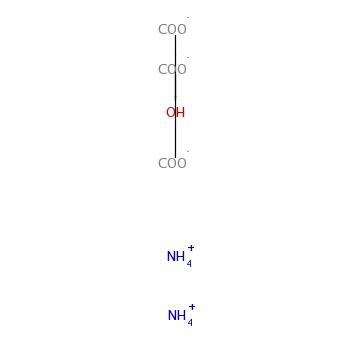
|
|
UUID
|
IUC4-b036ff75-0f3c-323b-b200-ed5f46cf5101
|
|
|
Dossier UUID
|
0
|
|
|
Author
|
XML Transformation V4.0 Plug-In
|
|
|
Date
|
2011-06-23 11:55:01 JST
|
|
|
Remarks
|
Successfully migrated to IUCLID 5.5 format.
|
|
Legal entity name
|
National Institute of Health Sciences
|
|
Flags
|
IT system
|
ID
|
Remarks
|
|
LEO
|
10767
|
||
|
IUCLID4
|
16558402024DIV750
|
|
Address
|
1-18-1 kamiyoga
|
|
Address
|
Setagaya-ku
|
|
Postal code
|
158-8501
|
|
Town
|
Tokyo
|
|
Country
|
Japan
|
|
Organisation
|
National Institute of Health Sciences
|
|
Department
|
Division of Risk Assessment
|
|
Title
|
Dr.
|
|
First name
|
Akihiko
|
|
Last name
|
Hirose
|
|
Address
|
1-18-1 Kamiyoga
|
|
Address
|
Setagaya-ku
|
|
Postal code
|
158-8501
|
|
Town
|
Tokyo
|
|
Country
|
Japan
|